Complete instrument system for finishing and polishing precious, semi-precious, non-precious, and chrome-cobalt alloy restorations. Each alloy type has distinct hardness and surface characteristics — Wagner Precision provides the correct instrument and technique for each.
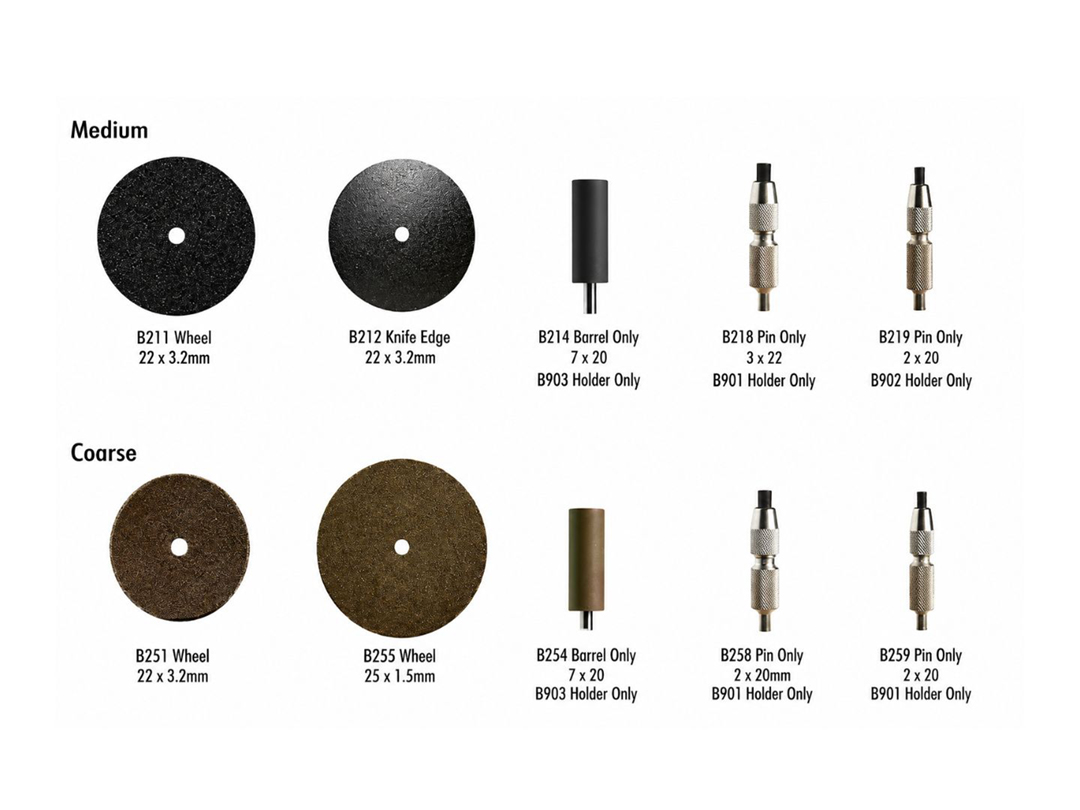
Metal restorations span a wide range of hardness values — from soft, ductile high-gold alloys to the abrasion-resistant chrome-cobalt frameworks used for removable partial dentures and implant superstructures. Wagner Precision alloy instruments are formulated to match the cutting requirements of each alloy class, eliminating guesswork and delivering consistent, reproducible results across the full spectrum of dental metals.
High-gold and gold-palladium alloys are the softest category of dental metals. They are ductile and susceptible to smearing under high abrasive pressure. The goal with precious alloys is controlled material removal followed by progressive burnishing to achieve a mirror-bright finish that demonstrates true metal quality.
Technique note: Use light, even pressure throughout. Heavy pressure on precious alloys causes smearing and heat buildup that can distort the restoration margin. Use coolant for initial trimming stages.
| Step | Instrument |
|---|---|
| 1. Trim & Contour | Coarse rubber abrasive wheel or cylinder |
| 2. Pre-Polish | Medium SiC silicone point |
| 3. Polish | Fine silicone polisher |
| 4. High-Gloss Buff | Polishing compound + muslin buff wheel |
Semi-precious alloys (typically palladium-silver or palladium-copper based) offer intermediate hardness. They are commonly used for metal-ceramic crowns and bridges where the metal surfaces visible at the margin must be finished to a high degree of accuracy and polish.
Technique note: Finish solder joints carefully with a cylinder or flame-shaped instrument before polishing. Uneven solder joints that are polished without finishing will remain visible in the final restoration.
| Step | Instrument |
|---|---|
| 1. Trim & Contour | Medium rubber abrasive cylinder or wheel |
| 2. Solder Joint Finish | Flame or cylinder rubber abrasive |
| 3. Pre-Polish | Medium-fine SiC silicone point |
| 4. Polish & Buff | Fine silicone + polishing compound |
Nickel-chromium alloys are significantly harder than precious and semi-precious metals. They require harder abrasives with more aggressive cutting action to achieve efficient material removal. NiCr alloys are used extensively for metal-ceramic frameworks, implant abutments, and laboratory-fabricated copings.
Technique note: NiCr alloys work-harden under sustained pressure. Use intermittent light strokes rather than continuous heavy pressure to maintain cutting efficiency and prevent instrument glazing.
| Step | Instrument |
|---|---|
| 1. Sprue & Finishing | Hard rubber abrasive or carbide bur |
| 2. Contour Refinement | Hard-bond cylinder or wheel abrasive |
| 3. Pre-Polish | Medium-grit SiC silicone instrument |
| 4. Polish & Buff | Fine silicone + polishing compound + buff wheel |
Chrome-cobalt is the hardest and most abrasion-resistant of the common dental alloys, used for removable partial denture (RPD) frameworks, bar-retained implant superstructures, and full-arch metal frameworks. Instruments must be capable of cutting through a very hard, dense alloy while maintaining dimensional precision at thin areas such as clasps and connectors.
Technique note: Avoid prolonged contact in one area — move continuously to prevent localized heat concentration. On thin clasp arms, use fine instruments only to avoid distorting the retentive geometry.
| Step | Instrument |
|---|---|
| 1. Casting Cleanup | Coarse carbide or hard rubber abrasive |
| 2. Framework Finishing | Medium hard-bond cylinder and wheel |
| 3. Pre-Polish | Hard SiC silicone point and cup |
| 4. Mirror Buff | Fine silicone + polishing compound + rag wheel |
Each instrument in the recommended sequence is available individually or as part of the complete ZrHP Diamond Kit.
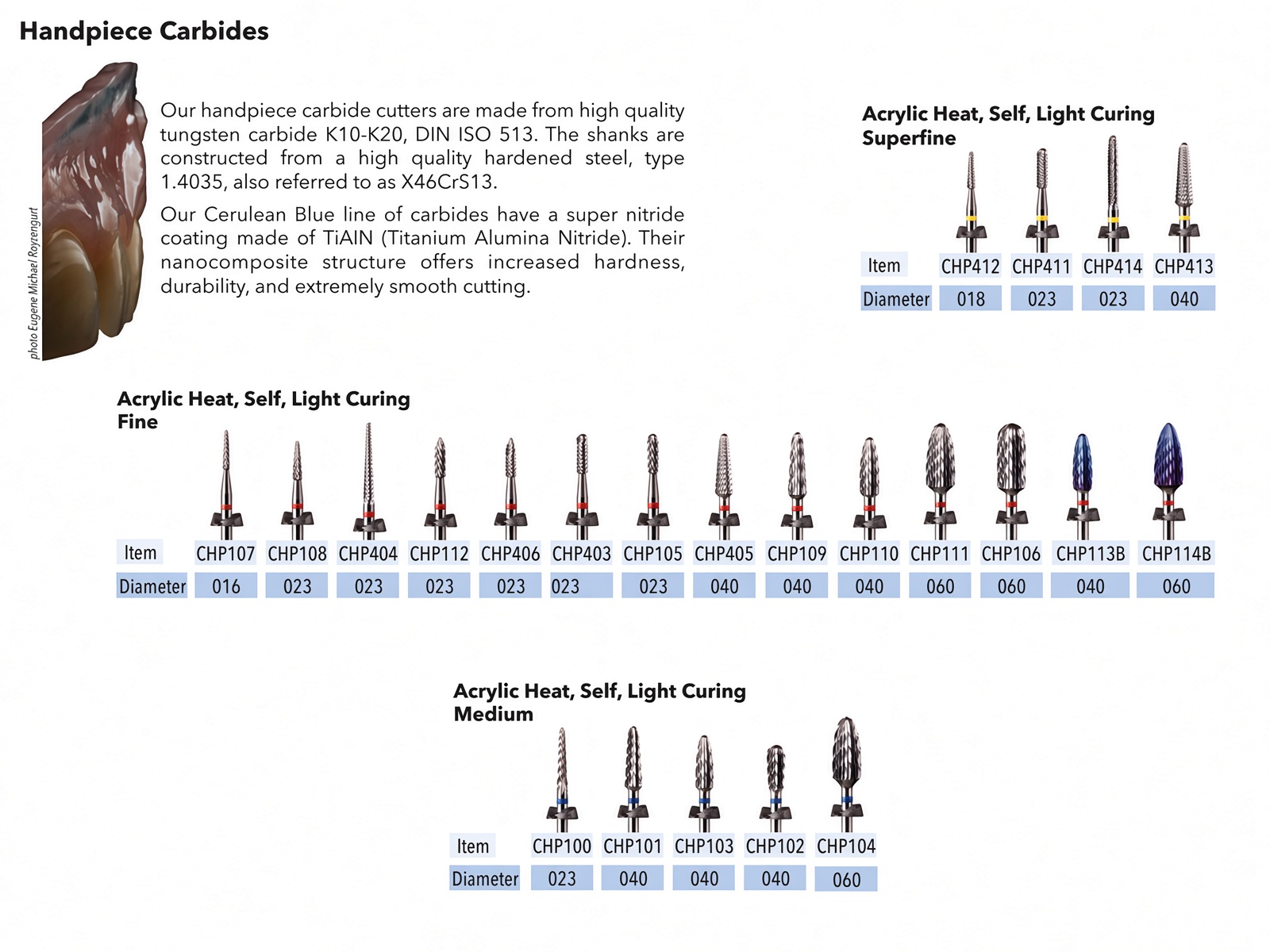
Precision tungsten carbide burs in HP shank configuration for laboratory contouring
View Product →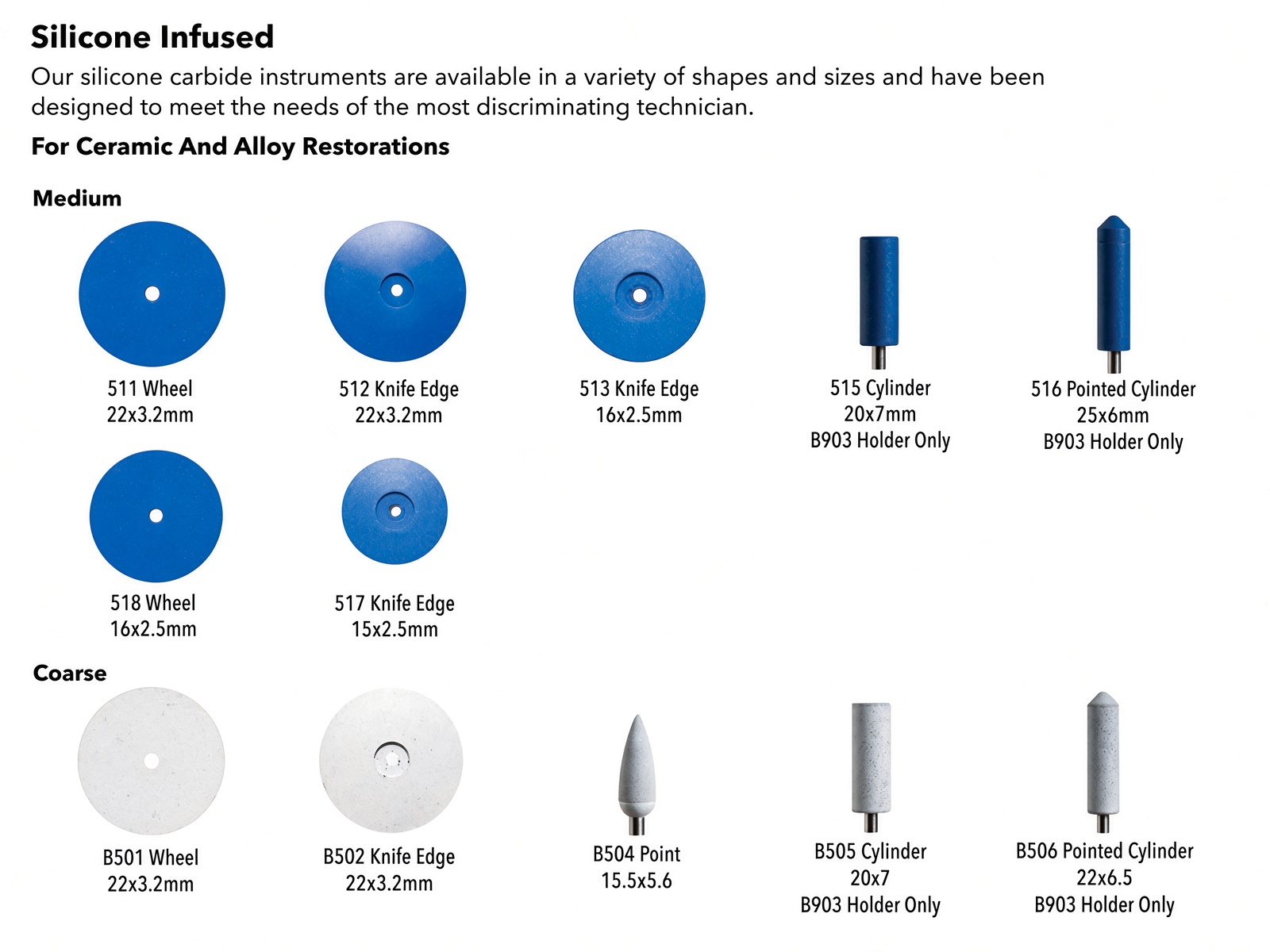
SiC-infused rubber instruments for efficient pre-polishing and surface refinement of metal, ceramic, and composite restorations
View Product →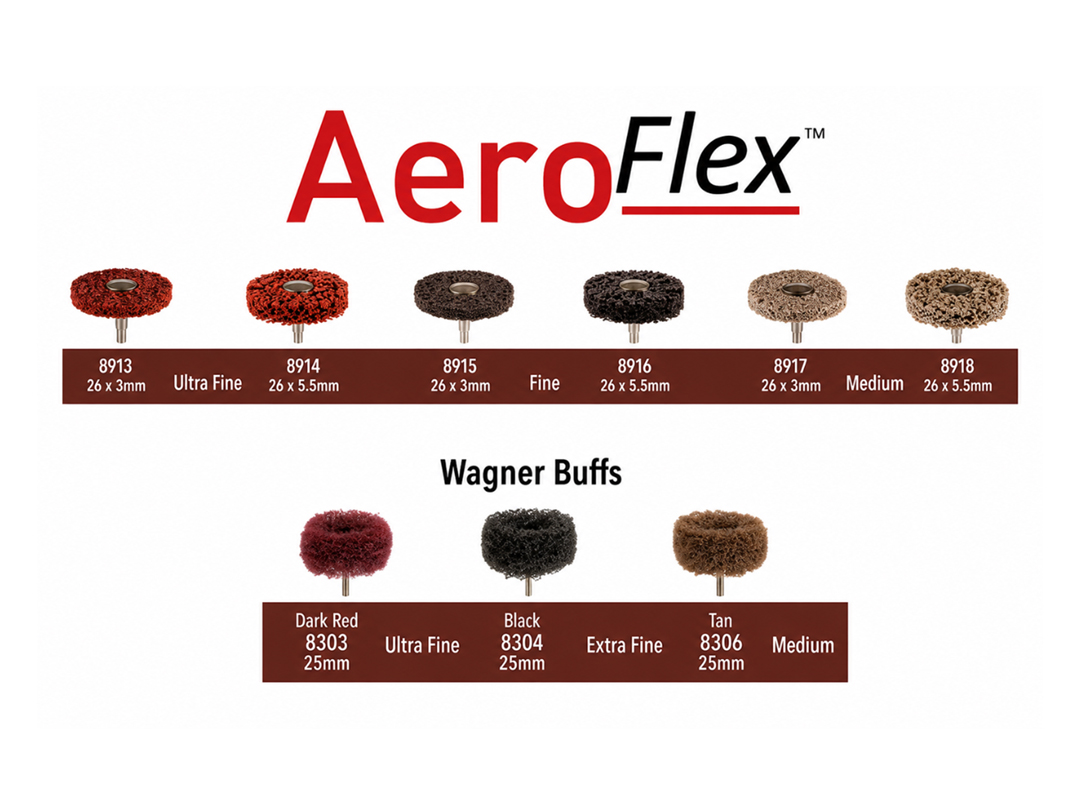
The Aeroflex system provides flexible mandrel-based finishing for contoured surfaces, interproximal areas, and curved restorations.
View Product →