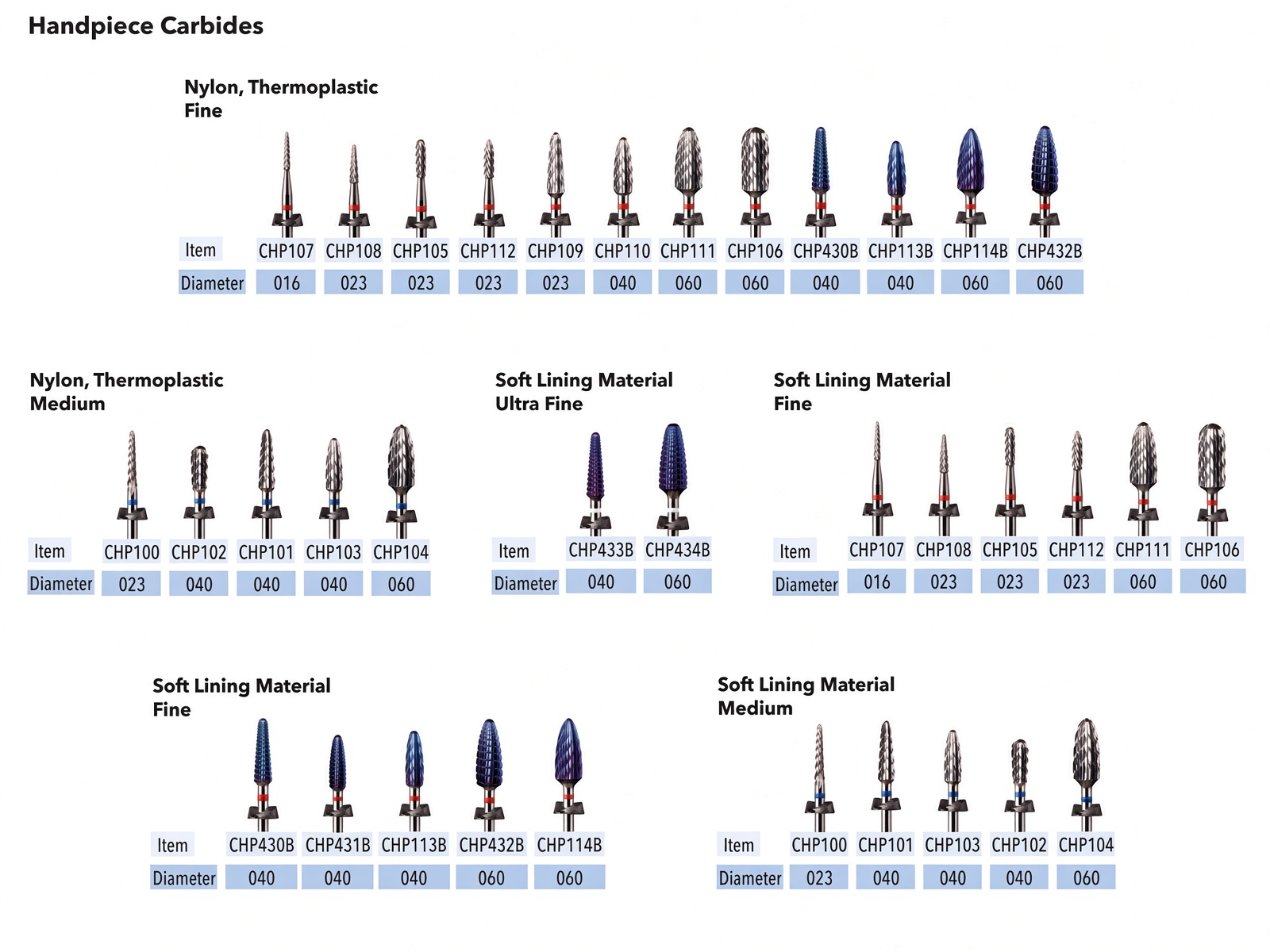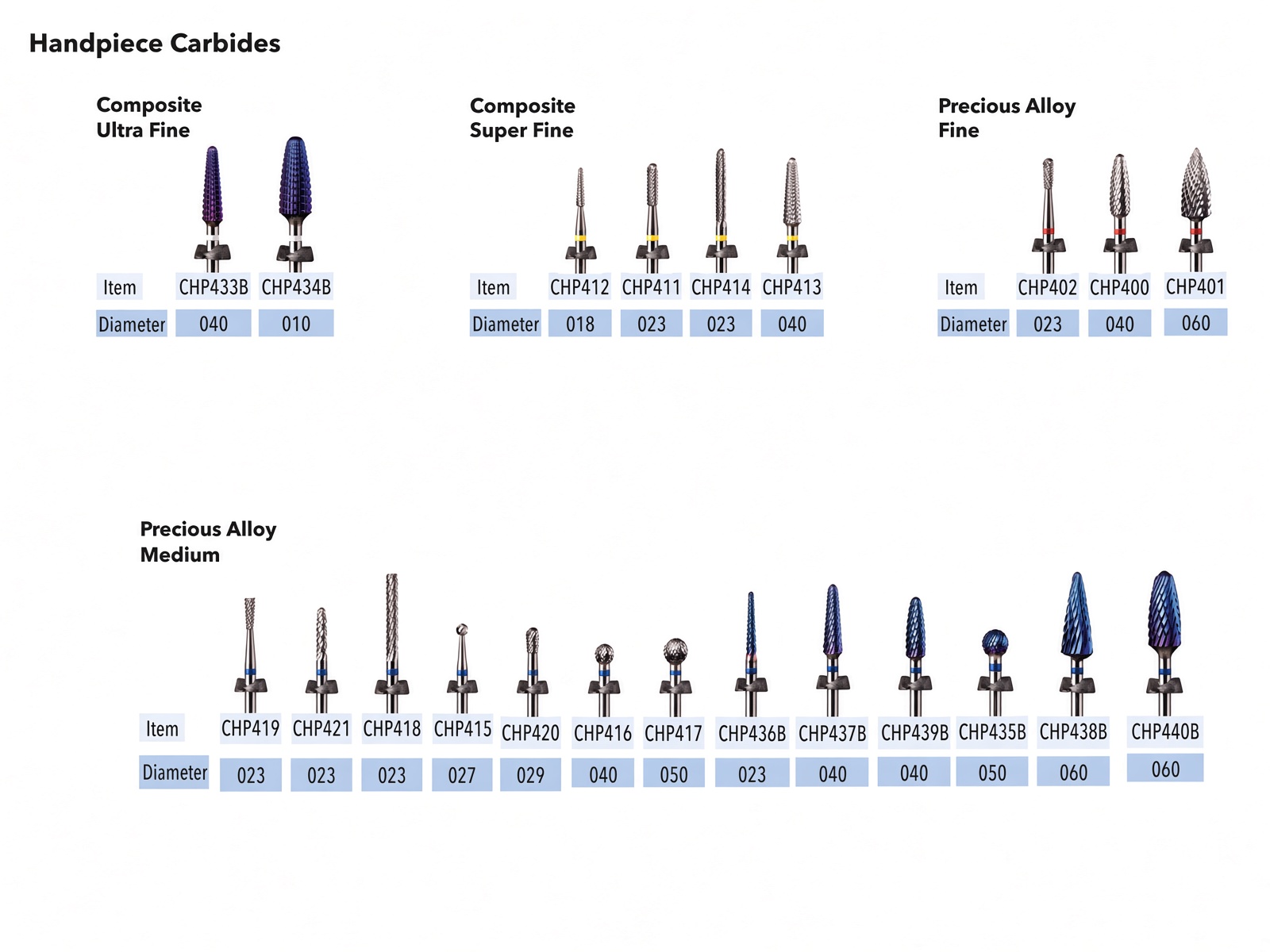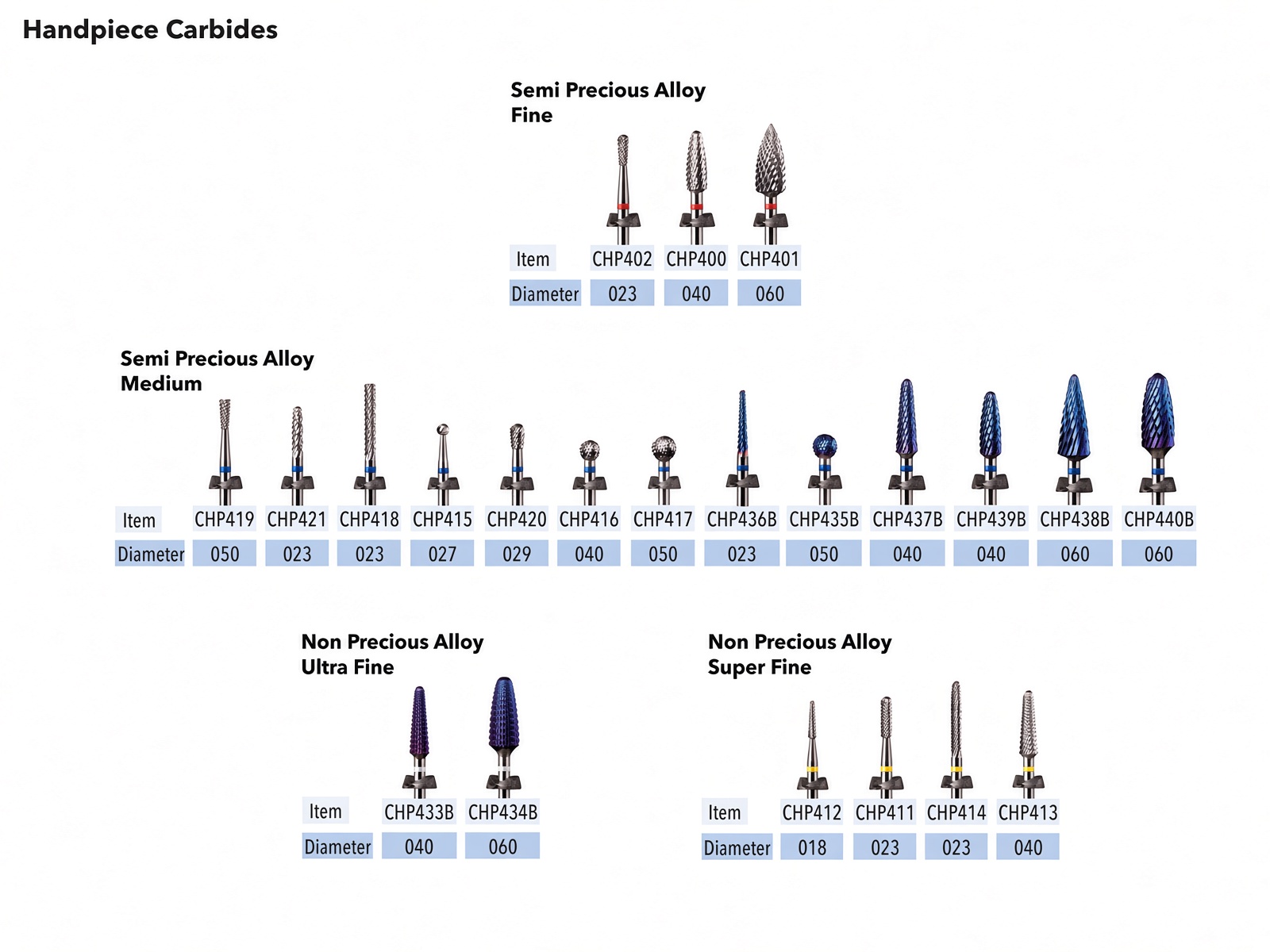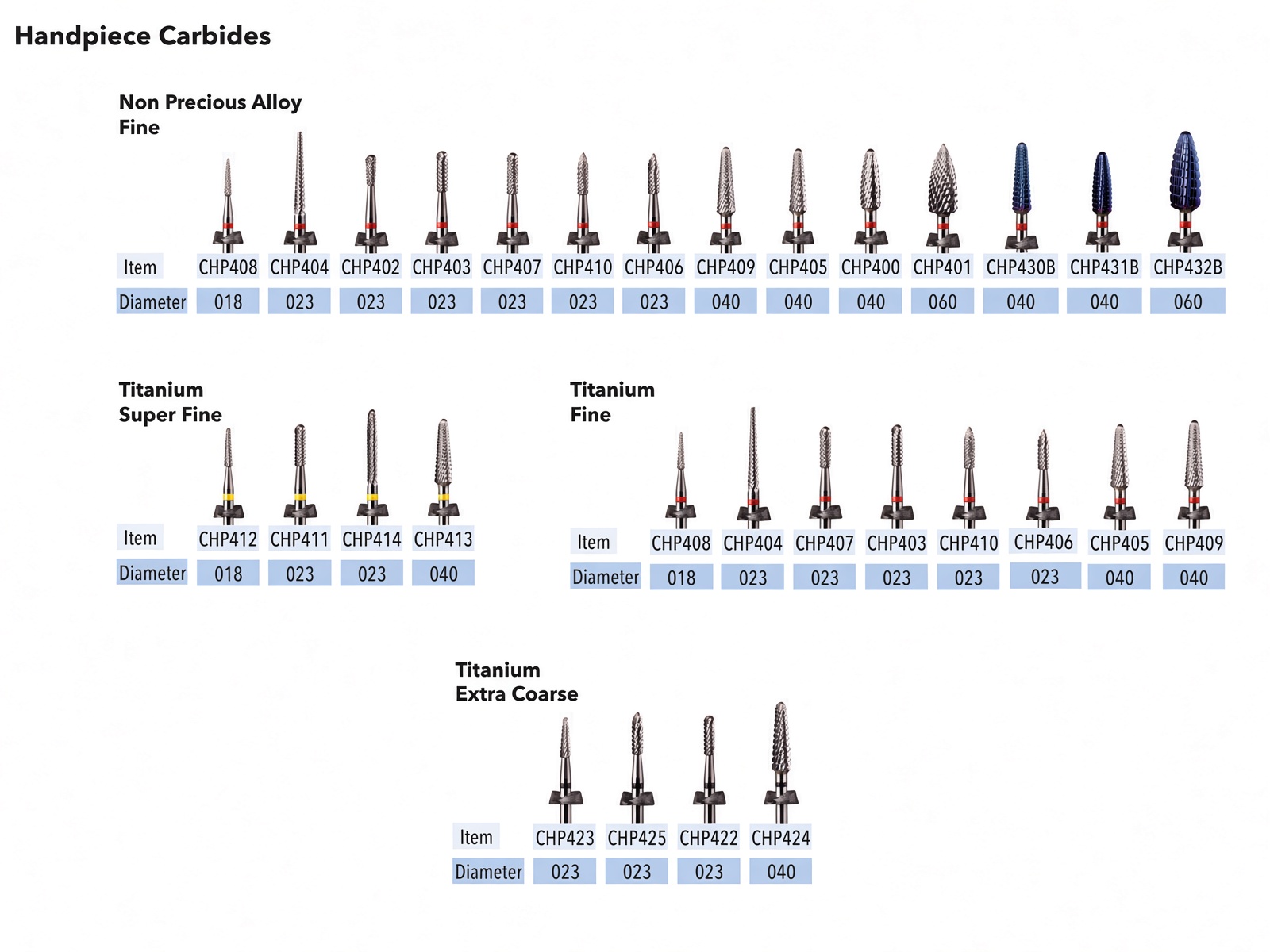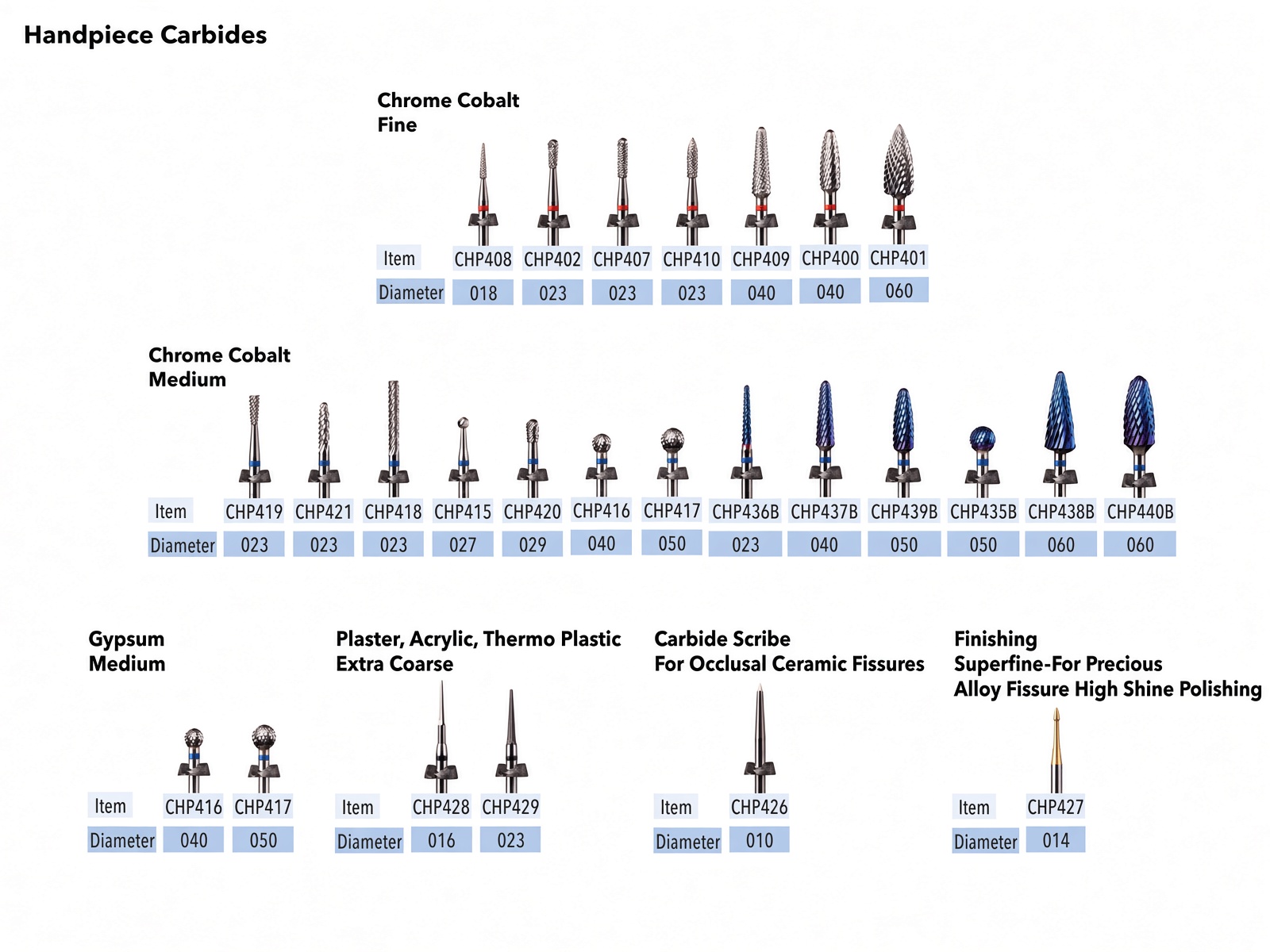
Precision tungsten carbide burs in HP shank configuration for laboratory contouring, trimming, and finishing of metallic alloys, acrylic, and PMMA restorations. Multiple cutting flute geometries optimized for each material type.
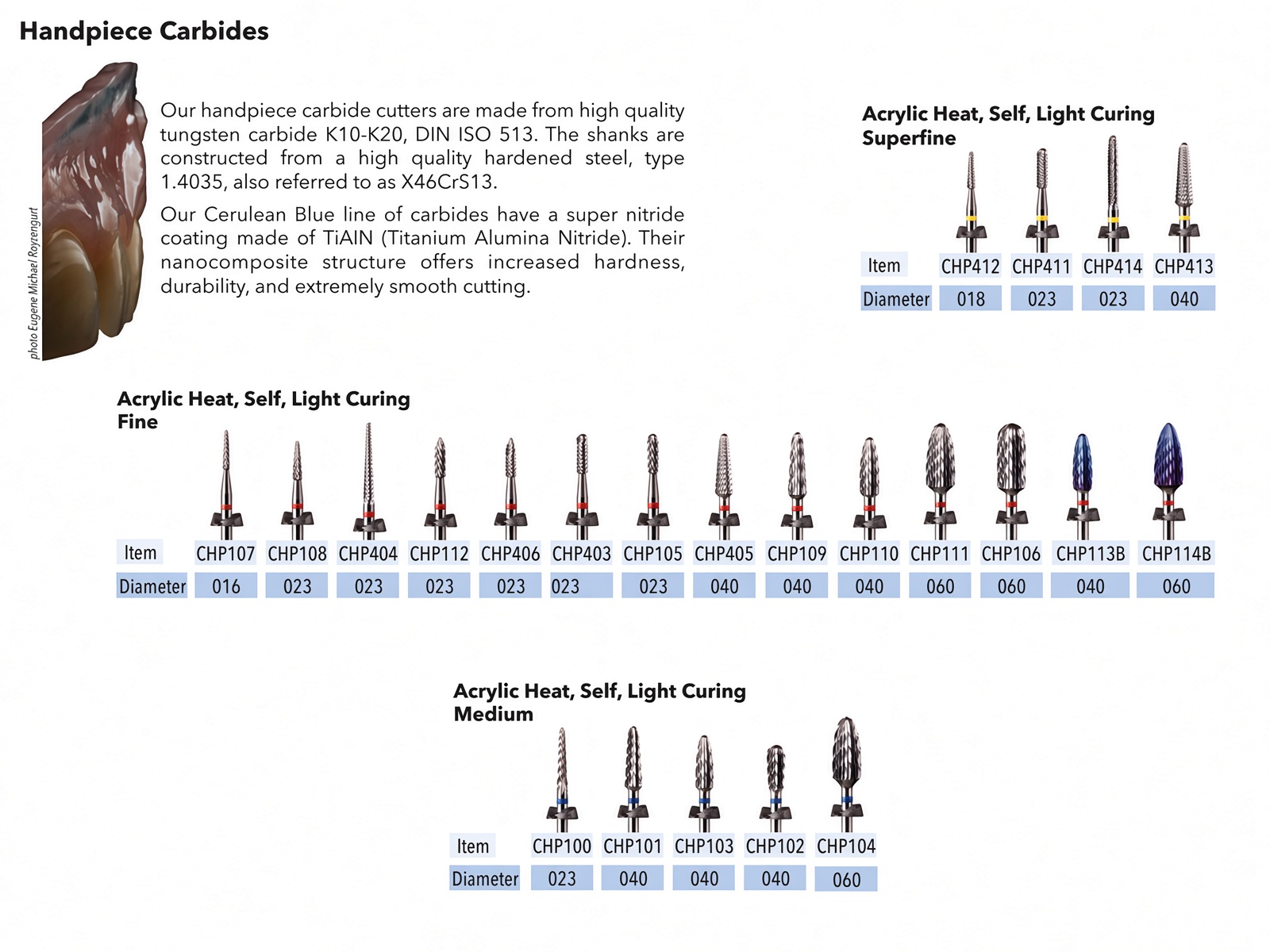
Tungsten carbide remains the preferred cutting material for metallic alloy contouring, acrylic trimming, and PMMA finishing in the dental laboratory. Wagner Precision HP carbide burs are manufactured from high-purity tungsten carbide blanks using precision CNC grinding, producing cutting flutes with defined angles, sharp edges, and consistent spacing that deliver controlled material removal in every pass.
The HP shank configuration makes these burs universally compatible with straight handpieces and all standard laboratory motor micromotor systems. Each shape and flute configuration is optimized for a specific material class and procedural application.
HP (Straight Handpiece)
ISO HP shank; 2.35 mm diameter
10,000 – 30,000 RPM
Metal: use with coolant; Acrylic/PMMA: dry or minimal coolant
For precious, semi-precious, non-precious, and CoCr alloys, HP carbide burs provide the aggressive material removal and surface finishing required in crown and bridge laboratory procedures.
Acrylic denture bases, partials, and repairs require a cutting geometry that removes material cleanly without heat-induced smearing. Wagner HP carbides for acrylic feature optimized flute geometry that evacuates chips efficiently.
CAD-CAM milled PMMA temporaries and long-term provisional restorations require smooth, precise contouring before polishing. HP carbides deliver clean cuts on milled PMMA without chipping or surface delamination.
The cutting flute geometry determines how aggressively material is removed and what surface finish is left behind. Selecting the appropriate flute configuration is as important as selecting the correct shape.
| Flute Type | Flute Count | Material | Characteristics |
|---|---|---|---|
| Standard Cut | 6 flutes | Metal alloys | Aggressive material removal; larger chip clearance; preferred for gross metal reduction |
| Fine Cut | 8 – 10 flutes | Metal alloys, PMMA | Smoother surface finish; reduced chatter; ideal for final metal trimming and PMMA contouring |
| Cross Cut | 6 + cross | Acrylic, PMMA | Intersecting flute pattern breaks chips efficiently; prevents acrylic loading and smearing |
| Spiral Cut | Variable | Metal, acrylic | Spiral flutes reduce vibration and chatter; smooth cutting action on curved surfaces |
| Finishing Cut | 12 – 16 flutes | Acrylic, PMMA | Near-smooth surface preparation for pre-polish; minimal scratch depth |
Margin trimming, interproximal access, taper cuts on metal and acrylic
Flat surface reduction, axial wall work, PMMA block contouring
Broad surface reduction, connector bulk removal, denture base thinning
Internal relief areas, tissue surface adjustment, connector rounding
Taper shaping, interproximal embrasures, angled surface finishing
Undercut removal, occlusal floor preparation, clasp seat preparation