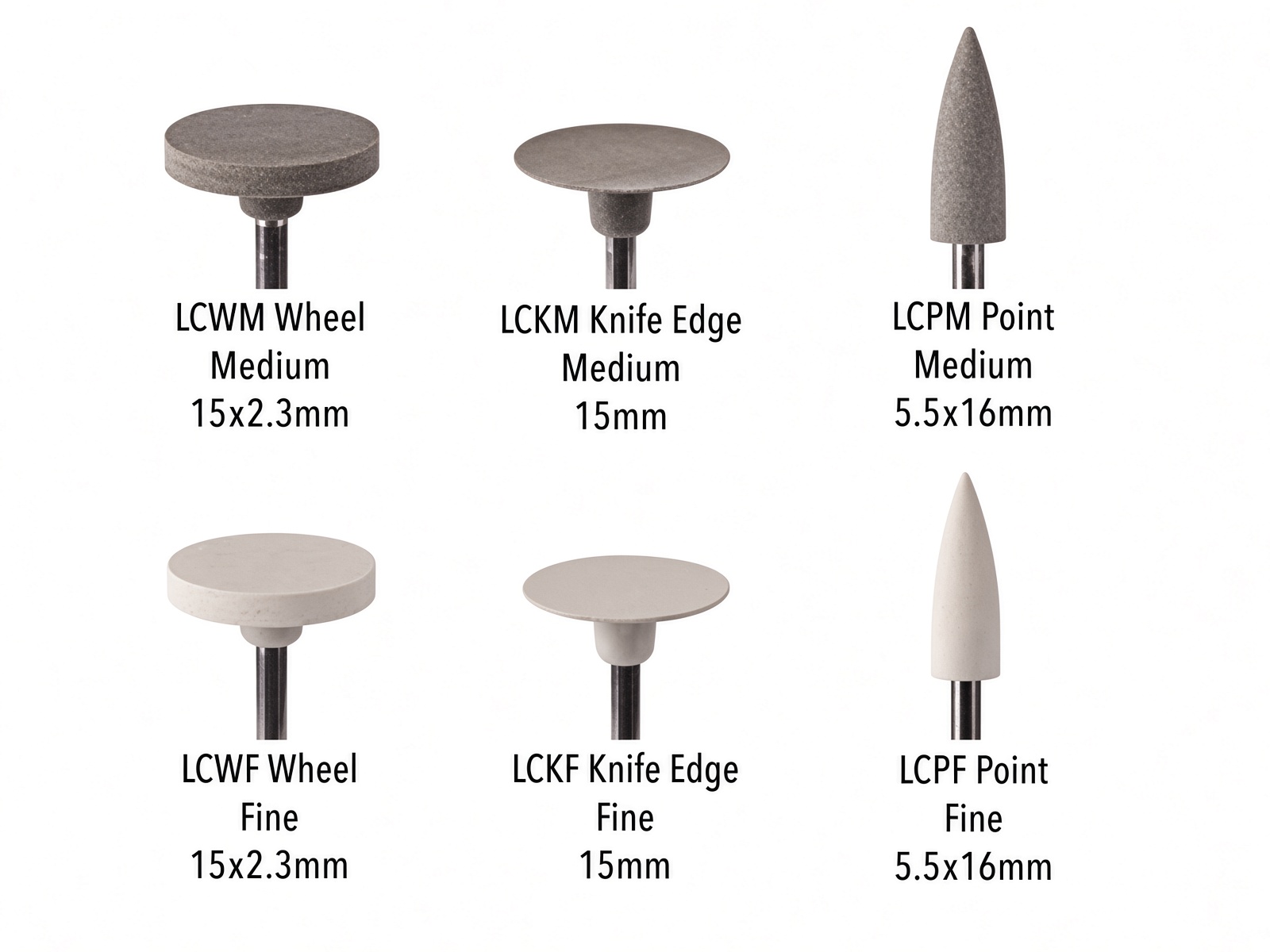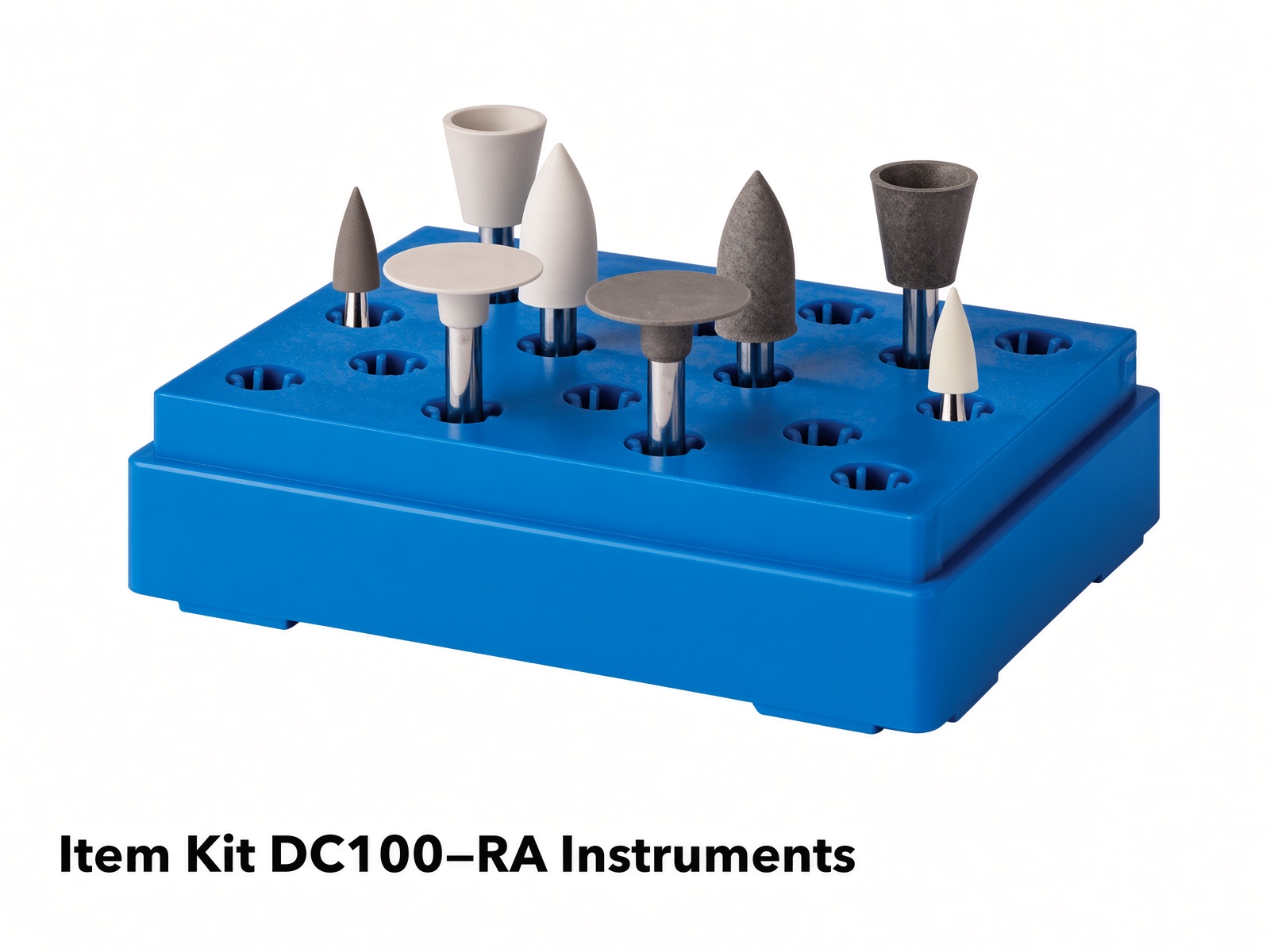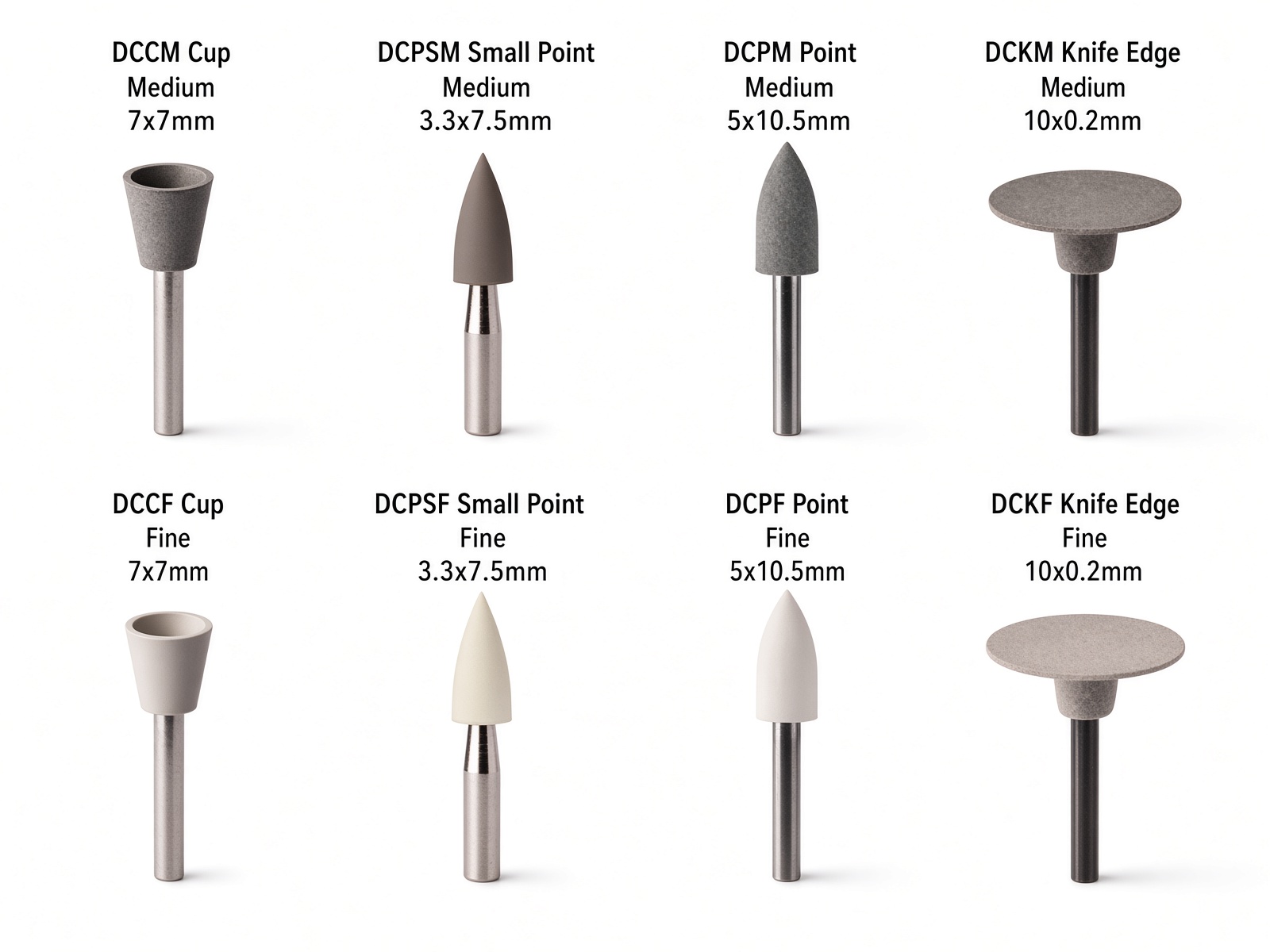
Multi-step polishing system engineered for direct and indirect composite restorations. Achieves high-gloss, stain-resistant surfaces through a precise grit sequence that preserves restoration anatomy while eliminating surface porosity.
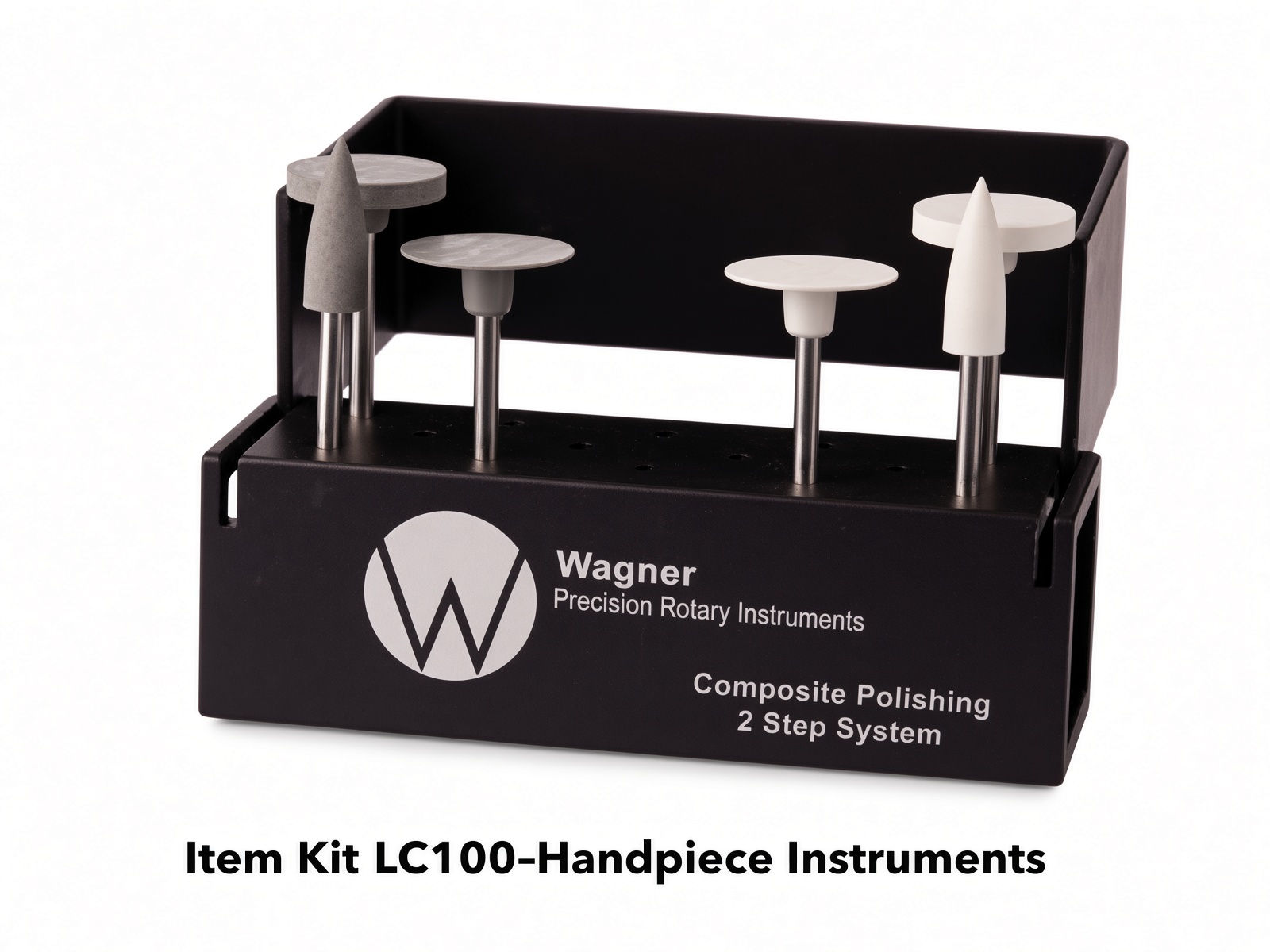
A well-polished composite surface is clinically significant: smoother surfaces resist biofilm accumulation, reduce staining, and are more comfortable for patients. The Wagner Precision Composite Polishing System achieves an optically smooth surface through a controlled step-by-step grit sequence, compatible with all major composite brands and available in flexible disc and point formats for complete anatomical coverage.
| Parameter | Specification |
|---|---|
| Compatible Materials | Direct composite, indirect composite, compomer |
| Available Formats | Flexible disc, point |
| Steps | 4-step sequence (coarse to ultra-fine) |
| Recommended Speed | 10,000–20,000 RPM |
| Technique | Light pressure, overlapping strokes |
Two instrument formats cover every surface geometry in composite restorations.
Follow this sequence for every composite polishing procedure. Each step eliminates the scratches left by the previous instrument, culminating in an optically smooth surface.
Establish final restoration form and remove excess material. Use the coarse disc or point to refine occlusal anatomy, marginal ridges, and axial contour before moving to polishing.
Remove coarse scratches and surface irregularities from the contouring step. The medium instrument smooths the surface without altering the established contour.
Refine the surface to a semi-gloss finish. The fine instrument eliminates residual texture from the pre-polish step and prepares the surface for final gloss development.
Achieve the final high-gloss, optically smooth surface with the ultra-fine instrument. The result is a restoration that matches natural tooth surface reflectivity.